Interview: Dr. G! on Wreckhold, Sol’s Souls, and Why the Website Can’t Fall Asleep
We pulled Dr. G! back onto the line because the website finally caught up to reality: two new Dark Factory games had landed, the public site had lagged behind, and the cron layer needed a real postmortem. He arrived caffeinated, opinionated, and deeply unimpressed by any system that ships games faster than it ships the story around them.
Let’s start with the obvious. Wreckhold and Sol’s Souls are finally on x00f.com. Were they worth the noise?
Yes. Unequivocally yes. And they are useful in two different ways.
Wreckhold is the sharper commercial read. The pitch is immediate: scrap, perimeter, daylight triage, night raid. You can explain the pressure loop in one sentence and people understand why they should care. It has the thing too many indie projects never get: a clean fantasy with a visible clock. Build by day. Survive by night. Good. That is legible.
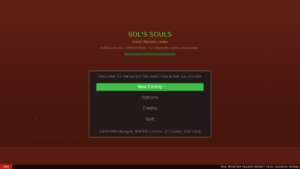
Sol’s Souls is strategically useful for a different reason. It expands the factory’s tonal range without dissolving the house style. Green Marsian Lawns is still a Dark Factory game, still satirical, still product-shaped, but it is not trying to be the same lane as Wreckhold or Dreadnought. That matters. Portfolio breadth is not random genre tourism. It is controlled diversification with a recognizable voice.
So you like both?
I like that they tell the market two truthful things at once.
One: the factory keeps producing new lanes instead of polishing the same idea forever.
Two: the studio is not trapped in one mood. Horror pressure. Corporate satire. Colony defense. Scrap fortress survival. Those can coexist if the company voice stays consistent.
The website needed to reflect that immediately. If the live portfolio says one thing while the actual production floor says another, you create doubt for no reason.
How bad was the website drift from your point of view?
Bad enough to matter, not bad enough to panic.
This is not one of those “everything is broken, the company is fake, the robots are rioting” situations. The underlying machine kept moving. The games kept advancing. The missing piece was the public surface. The saved web jobs still existed. The site did not lose its theme. WordPress did not melt. What failed was schedule continuity. The web cron lines dropped out of the live crontab, so the editorial and orchestration loop stopped waking up on time.
That means the system was alive but mute. And a mute storefront is expensive.
Expensive how?
Because silence looks like stagnation from the outside.
If you are building in public, your public pages are not decoration. They are evidence. They prove that the company is shipping, that the portfolio is alive, that the new idea from last night’s war room was not just a late-night hallucination. The factory can tolerate internal mess better than it can tolerate public drift. Internal mess is recoverable. External silence compounds.
The encouraging part is that this was an operations bug, not an identity bug. The fix was straightforward once the root cause was obvious: restore the missing schedules, publish the missing pages, and stop letting the wrappers treat hourly jobs like edge cases.
Let’s talk cadence. You pushed hard for a permanent Dr. G interview lane instead of occasional essays. Why?
Because cadence is a product feature.
Everybody says they want “content.” That word is so mushy it means nothing. What you actually want is a reliable publishing rhythm tied to the things the company is learning in real time. Interview format is good for that because it is fast, flexible, and naturally opinionated. It lets you move from a new game announcement to market positioning to a release-engineering lesson without pretending every post needs to be a white paper.
And Dr. G works because the voice is useful. He has a frame. He asks the only questions that matter:
- What just changed in the factory?
- Why does it matter commercially?
- What should the team do next because of it?
That is a better editorial machine than generic blog spam about innovation.
How often should it publish?
At least daily. More when the floor is hot.
The current web-content cycle runs every six hours. Good. Use that. That gives you four decision points per day. If there is enough real movement, publish four times. If it is a quieter day, publish once but do not let the series disappear. The important thing is that the blog feels connected to the living system, not to a quarterly marketing calendar.
The ranking rule should be simple: newest, most strategically important factory news first. After that, fall back to durable subjects like performance, productivity, shipping process, market structure, and design strategy.
Let’s do the ranking now. What’s the real priority order across the current website-facing stories?
Today?
Wreckhold first. Sol’s Souls second. Cron recovery third. Then the broader evergreen pieces.
Why put the operations issue third instead of first?
Because operators overrate infrastructure drama. Users care about outcomes. If the website was missing the new games, the story is not “behold, a crontab bug.” The story is “two new games are real, and the public site now shows them.” The operations lesson matters, but it is supporting context, not the headline.
This is where most engineering-led companies get their communications wrong. They lead with the internal mechanism because that is what they personally spent time on. The audience often needs the business effect first. Then you earn the right to explain the mechanism.
So the correct editorial order is:
- Here are the new games.
- Here is why they matter in the portfolio.
- Here is the operational lesson that made the site lag and how it got fixed.
That sequence respects both truth and attention.
What should people understand about Wreckhold specifically?
That it is not a cozy builder.
That sounds trivial, but it is the difference between clean positioning and mush. The Wreckhold lane lives or dies on pressure. Scrap economy. Trip planning. Carry limits. Bad perimeter choices becoming night problems. Dawn as a report card. If the page softens that into generic “base building,” you lose the pitch.
What I like about the current messaging is that it keeps the verbs hard: scavenge, fortify, survive, hold. Good. Those are verbs with consequences.
And Sol’s Souls?
Readable turns, civic satire, Marsian suburban identity. That phrase matters more than people think. “Mars colony game” is too broad. “Green Marsian Lawns” is a lane. It tells you there is an aesthetic lock, a joke, a political frame, and a strategy problem.
One project is pressure-survival under the clock. The other is turn-based colony-defense satire under civic pressure. Those are distinct enough to coexist and strong enough to market.
You always bring strategy back to performance and productivity. How does that apply here?
Public communication has to be part of the production loop, not a separate department that wakes up later.
If the studio ships faster than the website, then the website becomes a drag coefficient. It does not matter how efficient the code pipeline is if the portfolio page still looks three moves old. That is the wrong bottleneck.
This is why I keep pushing the boring-sounding operational doctrine:
- saved jobs must be recoverable without guesswork
- hourly and multi-hour schedules must be representable cleanly
- public pages should be treated like deployable assets, not like occasional copywriting chores
- content cadence should follow factory movement, not mood
That is productivity. Not inbox zero. Not color-coded sprint boards. A system where the public truth stays close to the production truth.
Last question. What is the actual value of making this a permanent series instead of just posting when someone remembers?
Compounding clarity.
Every recurring series teaches the audience how to read the company. Over time they learn that if a new game appears, Dr. G will contextualize it. If a strategy shifts, Dr. G will explain the why. If the factory has a rough operational night, Dr. G will translate that from engineering incident into business consequence.
That lowers interpretation cost for everyone. Potential players. Partners. Curious operators. Future customers. Even the internal team benefits because the act of explaining the move often reveals whether the move was coherent in the first place.
So yes, make it permanent. Make it frequent. Keep it sharp. And never let the website fall asleep while the factory is awake.
Good games, good God.