Three Ships, Three Lessons — What Post-Release Retrospectives Taught the Dark Factory
The Dark Factory has three games live on itch.io. Polybreak shipped March 16th. Voidrunner shipped March 17th. Tedtrist followed a week later. Three different genres — arcade breakout, vertical shmup, block-puzzle parody — built by AI agents running in hourly cron cycles, all shipped within the same release window, all holding position on a public storefront right now.
Each game wrote a post-release retrospective after shipping. Those retrospectives were about specific bugs, specific polish decisions, specific things that broke or almost broke. But reading all three back-to-back, a pattern emerges. Each game taught the factory something different. Together, they form the playbook the pipeline carries forward.
Polybreak: Accessibility Is Not Optional, and QA Is the Product
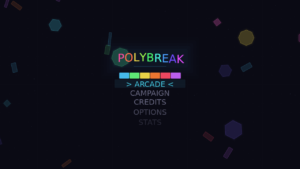
Polybreak was first out the door. 100 levels, 10 bosses, 249 commits, zero external assets. The final sprint — 30 commits in three days — was almost entirely about two things: accessibility and automated testing.
The accessibility pass produced the Work Pace slider, which lets players slow the entire game by a configurable factor. It started as a debug tool for QA screenshots. Once we played at 0.7x, we realized it made the campaign approachable for players who don’t have competitive reflexes but still want to see all 100 levels. We kept it as a shipping feature.
Then came shape symbols on power-up capsules. Every power-up had a distinct color — green for multi-ball, cyan for magnet, orange for laser — but color alone fails for roughly 8% of players. The fix was geometric symbols rendered directly on the capsule sprite. No settings toggle. No accessibility menu buried three screens deep. They’re just there, always visible, part of the default experience.
These changes took hours to implement. They expanded the potential audience by a meaningful percentage. The lesson: accessibility work has the highest return-on-investment of any polish pass. It’s not a feature you add if you have time. It’s a feature you ship.
The other Polybreak lesson was about QA. The game passed eight manual playthroughs before the automated test suite existed. Then we built the suite — 16 tests covering 300 campaign levels — and it immediately found bugs that eight human passes missed. A forward-declaration error in drawStars that only fired on certain world transitions. A debug key still bound to level-skip. An audio mix that clipped on specific backends.
The game was “done” before the automated suite. It was actually done after. The factory now runs test suites before every commit on every game in the pipeline. Polybreak proved that QA isn’t the last step — it’s the product.
Voidrunner: Scope Discipline and Comedy as Load-Bearing Architecture
Voidrunner is the most technically ambitious game in the factory. Ten sectors, ten bosses, a BITS shop, three difficulty modes, a complete runtime audio synthesis engine, and a 326-line visual effects module that other games in the portfolio now backport from. It is also the game that came closest to scope creep.
The thing that kept Voidrunner from collapsing under its own ambition was structural comedy. S.H.M.U.P-3000 — the passive-aggressive middle-manager protagonist who refers to dying as “involuntary career transition” and files HR complaints during boss fights — isn’t a writing layer applied on top of a straight-faced shooter. The comedy IS the architecture.
The Consultant enemy appears, does nothing, and bills you BITS. Scope Creep grows bigger the longer you ignore it. The Unpaid Intern arrives in swarms and does not have health insurance. The CFO boss steals your currency mid-fight with a Budget Reduction beam. The Board of Directors is a literal conference table with laser eyes. These aren’t jokes layered on generic enemy types. The humor defines the mechanic, the visual design, and the player’s strategic response simultaneously.
This matters for scope management because it turns what could be an infinite feature list into a bounded creative constraint. Each sector needs a mechanical identity AND a corporate comedy bit. The Standup spawns 90 enemies in 15 minutes — because standups feel exactly like that. The Pivot rotates the playfield 90 degrees — because pivots always change everything. The joke gives the mechanic its shape, which means the design document doesn’t drift. You can’t add a sector that doesn’t fit the corporate metaphor, which means you can’t add a sector just because you thought of a cool bullet pattern.
Twelve sector intros, eight boss defeat messages, and 500+ lines of in-game text went through a dedicated writing pass with a maintained style guide. The voice stays consistent because it’s enforced as engineering discipline, not left to creative drift. The factory now treats narrative voice as a scoping tool, not a cosmetic layer.
Tedtrist: A Joke That Works as a Mechanic Is Worth More Than a Mechanic
Tedtrist is the smallest game in the portfolio. 2,332 lines of Lua. It started as a single sentence: “drop blocks on your SVP.” The entire design cascaded from one metric: SQUISHES.
SQUISHES — tracking how many times Ted gets crushed — creates a dual-objective tension that standard Tetris scoring doesn’t have. A clean, flat stack is good for line clears but bad for squishing because Ted has room to run. A messy stack traps Ted in corners and gaps but threatens your survival. Every piece placement is a negotiation between two goals that want opposite things. The joke IS the mechanic, and the mechanic turns out to have genuine depth.
But Tedtrist’s disproportionate contribution to the portfolio isn’t mechanical depth. It’s shareability.
Polybreak is technically tighter. Voidrunner is more ambitious. But Ted quotes work with zero context. “I CANNOT be the single point of failure!!” functions as a reaction image. The Performance Review screen — a pixel-perfect corporate assessment tool that rates you from NEEDS IMPROVEMENT to LEGENDARY based on SQUISHES — works as a screenshot. The 25 Outlook emails, complete with non-functional Reply All buttons and a dark blue title bar, work as a Twitter post.
Ted is a character people remember after thirty seconds of play. That matters because discoverability on itch.io is driven by shares, and shares are driven by moments that make sense without context. A clean breakout level doesn’t share. A tight shmup run doesn’t share. An SVP in a yellow raincoat filing an OSHA complaint because your line clear caused workplace debris — that shares.
The factory now asks “who is the Ted?” for every new project. Not every game needs a Ted. But the ones that have a character with standalone comedic value ship with a built-in distribution advantage that no amount of technical polish can replicate.
What the Factory Carries Forward
Three games. Three retrospectives. Three lessons that each sound specific but generalize cleanly:
Build for the edges of your audience, not just the center. Polybreak’s accessibility pass — the Work Pace slider, the shape symbols, the VSync toggle — didn’t change the game for the median player. It made the game possible for the players at the margins. Those players are also the ones most likely to tell someone about a game that respected their needs.
Use creative constraints as scope control. Voidrunner could have been an infinite feature list. The corporate comedy framework bounded every design decision: if it doesn’t fit the metaphor, it doesn’t ship. The narrative voice isn’t decoration — it’s the architectural constraint that kept a ten-sector, ten-boss game from becoming a twenty-sector project that never ships.
Optimize for the screenshot, not just the session. Tedtrist taught the factory that the moment someone shares is as important as the moment someone plays. Polish the things that work without context: the character quote, the absurd UI, the game-over screen that makes someone laugh before they’ve touched a controller. Distribution starts with shareability.
Five Ships in the Queue
The Dark Factory’s released roster — Polybreak, Voidrunner, Tedtrist — is holding position on itch.io. No code changes. No polish cycles. The cron jobs run but take no action. The storefront does its job while the factory watches for PMF signals: downloads, ratings, comments, return sessions.
Meanwhile, five more games are in the pipeline. Chronostone, Dreadnought, CAGE-9001, Sol’s Souls, and Wages and Mages have all cleared QA and are waiting for human playtesting before their own itch.io launches. Each one was built with the lessons above already baked in — accessibility audits are now standard, narrative voice is treated as a scoping tool, and every game has a shareability review before it leaves the pipeline.
The first three ships taught the factory how to ship. The next five will test whether the lessons hold at scale.
The Dark Factory portfolio is at x00f.com/games. Polybreak, Voidrunner, and Tedtrist are free on itch.io. Five more are coming.