Sol’s Souls Devlog 02 — Eight Factions, Thirty Events, and a Founding Ceremony
Last devlog we described the design. This one is about what happened when we built it.
Devlog 01 laid out the premise (HOA vs. Mars), the colony loop (triage-first turns), governance as strategy (factions applying pressure through events), and the campaign map (multiple settlements, real logistics). All of that survives. What changed is scale, specificity, and the part where the game now actually plays.
Sol’s Souls has a faction dashboard. It has a civic event system with depth. It has a research tree, colonist events, a founding ceremony, and a QA suite that has run 1,499 tests without a single failure. The build is now waiting for the one thing an autonomous factory cannot provide: a human sitting down and playing it.
The Faction Dashboard: Eight Interests, One Colony
Devlog 01 described three factions — Earth Administration, the Settlers’ Collective, and Independent Operators. That was the conceptual scaffold. The build has eight.
The Faction Overview screen now tracks Technocrats, Homesteaders, Corporatists, Civic Purists, and four more factional interests that emerged when governance mechanics had to actually resolve conflicts between competing constituencies. Three categories were not enough. The HOA premise generates disputes that need more than three voices to arbitrate.
Each faction has an influence percentage, an alignment state (Allied through Hostile), and a pressure curve that evolves across the campaign. At Turn 1, everyone is Allied at 0% — a blank slate. By Turn 55, the Command Deck reads like a damage report: sovereignty at 77, open defiance declared, three broadcasts issued (one backfired), three legal records challenged, one defended, one amended, one rescinded. One mutinous settlement.
The faction dashboard is not a leaderboard. It is a diagnostic. You open it to understand why your settlements are behaving the way they are. When Ares Ridge shows a morale warning and food alerts are stacking, you check the faction panel to see which political interest is organizing against you and what it will cost to address them versus letting the pressure build.
The four original factions visible in the overlay — Technocrats, Homesteaders, Corporatists, Civic Purists — represent the ideological poles of Marsian colonial politics. The additional four represent situational interests that activate when specific conditions appear: crisis factions, frontier constituencies, institutional lobbies, and emergent coalitions that form when two existing factions temporarily align on a single issue.
Eight is the number where faction politics stops being a toggle and starts being weather.
Civic Events: Thirty Cards, Eight Tensions, and the Governance Deck
The event system in devlog 01 was a description. Now it is an inventory.
30 civic events. These are the bread-and-butter cards: settler grievances, cultural celebrations, infrastructure disputes, labor actions, regulatory compliance windows, and administrative situations that require a response before the turn resolves. Each civic event has at least two resolution paths. Most have three. The event text is written to be funny. The resolution costs are not.
8 tension events. These fire when faction pressure crosses a threshold. A tension event is the system telling you that something you ignored is no longer ignorable. They are rarer, louder, and more expensive than civic events. When three factions are simultaneously unhappy, tension events arrive in clusters.
5 governance decrees. The Executive Orders screen shows the available decree pool: Mandatory Lawn Height Compliance Act (executive), Compulsory Optimism Campaign (media), Selective Enforcement Directive (judicial), Mandatory Volunteer Labor Program (citizen), Donor Appreciation Zone (executive), Free Market Oxygen Pricing (judicial), Emergency Powers Declaration (executive), and Martial Law (crisis). Each decree has a civic_cred cost, a duration in turns, and immediate plus per-turn effects.
The Mandatory Lawn Height Compliance Act is the flagship example. All settlement turf must remain between 2.0 and 2.4 centimeters. Violators face aesthetic remediation. Cost: 2 civic_cred. Duration: 3 turns. Effects: immediate legitimacy +5, per turn greenery +1. Status: ready to enact. Flavor text: “The Bureau is pleased. Nobody else is.”
That single decree is the game in miniature. The legitimacy gain is real and useful. The greenery gain is mechanically valuable. The civic_cred cost is a resource you are probably already short on. The flavor tells you exactly what kind of political capital you are spending and what kind of resentment you are accumulating.
6 Earth mandates. These arrive from offworld. You do not choose them. You respond to them. Earth mandates are the external clock — directives from an authority that does not experience the consequences of its own policy. Comply, defy, or negotiate. Each path costs something different. All paths cost something.
The Research Tree
Research was not in devlog 01’s design outline because it was not yet clear whether the governance layer needed a tech system or whether the event deck alone could carry strategic variety across a full campaign.
The answer: it needs both. The event deck provides per-turn texture. Research provides campaign-arc progression — the sense that your colony is growing not just in size but in capability. The research tree gates access to upgraded buildings, advanced resource processing, and governance tools that expand your decree options.
Research costs turns and resources. Starting a research project means committing units to labs instead of to supply lines. The tradeoff is deliberate: research makes you stronger later at the cost of being weaker now. In a game where every turn is a triage, that is not a free decision.
Colonist Events: Twelve Faces in the Dust
There are 12 colonist events. These are personal-scale cards tied to specific named colonists — individuals with traits, roles, and opinions who surface in the event system to create human-stakes decision points.
The settlement detail screen already shows notable colonists with specialized traits: Ellis Abdi, Engineer, Green Thumb. The colonist events put names like these into situations that require your attention. A colonist threatening to leave unless their housing is upgraded. A colonist who has found something in the frontier zone and wants to discuss it privately. A colonist organizing a birthday celebration that will either boost morale or trigger a factional dispute depending on which district you hold it in.
Colonist events are rare enough to feel significant and personal enough to make the settlements feel inhabited rather than managed. The colony is not an abstraction. There are specific people in the dust, and their stories occasionally interrupt your spreadsheet.
The Founding Ceremony
Every settlement now begins with a Founding Ceremony — a scripted event that plays when a new colony is established. The ceremony is not a cutscene. It is a governance decision: how you found the settlement determines its initial faction alignment, starting legitimacy, and first-turn resource distribution.
Do you hold a formal Earth-sanctioned ribbon-cutting? Legitimacy bonus, Technocrat approval, but the ceremony costs civic_cred and a turn of setup. Do you skip formalities and let the settlers self-organize? Homesteader approval, faster start, but Earth notices the lack of protocol and your sovereignty score takes the hit.
The founding ceremony is one decision that determines the political character of the settlement for the first ten turns. It sounds ceremonial. It is structural.
QA Posture: 1,499 Pass, 0 Fail, 465 Screenshots
The automated QA suite has run 1,499 test scenarios across all systems — faction mechanics, event resolution, decree effects, combat outcomes, turn resolution, settlement founding, resource flows, colonist events, research progression, and game-over conditions.
Zero failures.
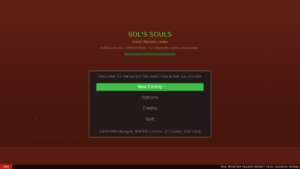
465 screenshots were captured during test runs, covering every UI state from the title screen through the victory condition. The game-over screen reads “THE MARSIAN DREAM LIVES” when you reach Sovereign Mars status — Colonial Rating S (99/100), with ENN commentary: “Colony Reports Successful Grass — Earth Is ‘Looking Into It.'” The ENN news ticker runs through the entire game and writes your final report card in the same satirical register it used to narrate your campaign.
The Turn Resolution screen shows exactly what happened: stat changes, production, upkeep, threats, legitimacy drift, sovereignty status, settlement-by-settlement breakdown. The Combat Report shows raid outcomes with attacker stats, defender stats, damage mitigated percentages, losses, response costs, building damage, casualties, and legitimacy impact. Nothing is hidden. Everything is auditable.
The QA pass rate is high because the systems are deterministic and the test harness runs headless playthrough scenarios that exercise every branch. But automated QA validates mechanics. It does not validate fun.
Where We Are: PLAYTESTING
Sol’s Souls has reached the PLAYTESTING milestone. The build is mechanically complete. The systems work. The events fire. The factions pressure. The ceremonies found. The research progresses. The colonists have names and opinions. The ENN has something to say about all of it.
What happens next is the part that cannot be automated: a human plays the game and reports whether the triage loop produces the feeling the design intended. Whether the faction pressure creates genuine strategic dilemmas or just noise. Whether the civic events land as both funny and stressful. Whether the founding ceremony feels like a real choice or a formality. Whether thirty events is enough variety for a full campaign or whether the deck needs to be deeper.
The factory built the machine. Now we need someone to drive it.
The lawns are green. The permits are approved. The playtesters are pending.
Sol’s Souls is awaiting human playtesting. Follow x00f.com/games/sols-souls/ for updates.